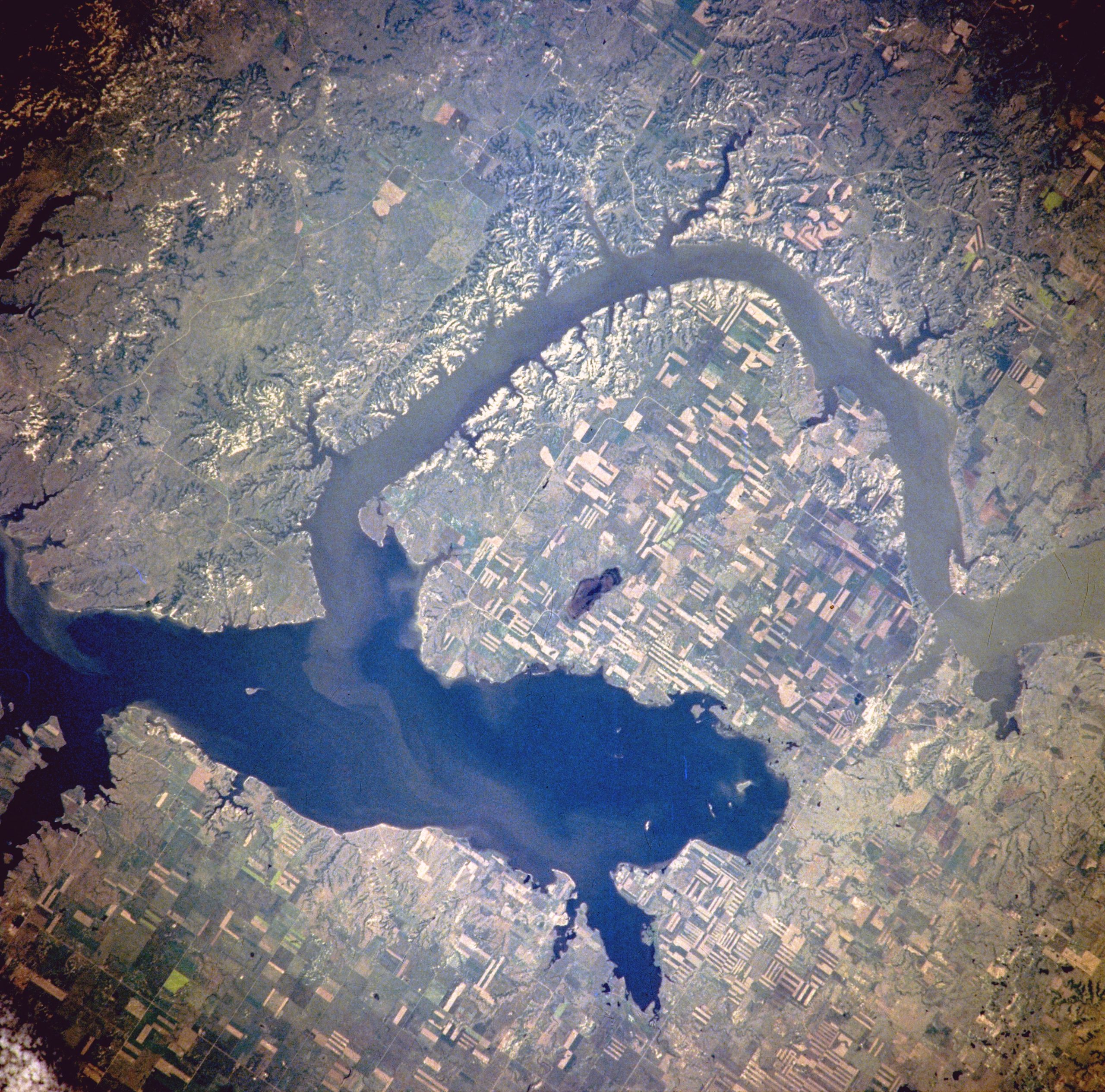
Lake Sakakawea is North Dakota’s inland sea – the largest lake in the state and the third-largest man-made reservoir in the United States. Stretching about 178 miles up the Missouri River behind the enormous Garrison Dam, it covers roughly 307,000 acres and has more shoreline than the California coast. It’s a world-class walleye factory, one of the few inland lakes in America with a real chinook salmon fishery, and the recreational heart of central North Dakota.
This guide covers Lake Sakakawea end to end: the walleye and salmon fishing, the Garrison Dam story, the state parks and marinas, the Lewis & Clark history, and how to plan a trip to big, wild water. It’s part of our growing North Dakota Lakes Database.
- Lake Sakakawea at a glance
- Garrison Dam and the making of the lake
- Fishing Lake Sakakawea
- State parks, marinas and boating
- Swimming, camping and the wild shore
- Water level and conditions
- Lewis & Clark country
- Getting there and what’s nearby
- Know before you go
- Frequently asked questions
- How big is Lake Sakakawea?
- What fish are in Lake Sakakawea?
- Are there salmon in Lake Sakakawea?
- What dam created Lake Sakakawea?
- Where can you camp on Lake Sakakawea?
- What is the water level at Lake Sakakawea right now?
- How far is Lake Sakakawea from Bismarck?
Lake Sakakawea at a glance
- Surface area: ~307,000 acres – the largest lake in North Dakota and 3rd-largest U.S. reservoir
- Length / shoreline: ~178 miles long; ~1,300+ miles of shoreline
- Maximum depth: about 180 feet near Garrison Dam
- Location: central & western North Dakota, on the Missouri River (Mercer, McLean, Dunn, Mountrail, McKenzie & Williams counties)
- Built: Garrison Dam, completed 1953 (U.S. Army Corps of Engineers) – one of the largest earthen dams in the world
- Named for: Sakakawea (Sacagawea), the Shoshone interpreter of the Lewis & Clark Expedition
- Top fish: walleye, sauger, chinook salmon, northern pike, smallmouth bass, white bass, yellow perch
Garrison Dam and the making of the lake
Lake Sakakawea is the product of one of the great dam-building projects of the 20th century. As part of the Pick-Sloan plan to tame the Missouri River, the Corps of Engineers built Garrison Dam near Riverdale, finishing it in 1953 – a 2-mile-long earthen embankment that backed the Missouri up into a reservoir the size of a small state. The project came at a heavy cost to the Three Affiliated Tribes (the Mandan, Hidatsa and Arikara of the Fort Berthold Reservation), who lost their bottomland villages and were forced to relocate as the water rose – a history the MHA Nation, whose land surrounds much of the lake today, keeps alive. Below the dam, the Garrison Dam National Fish Hatchery raises the walleye, salmon, paddlefish and other fish that stock waters across the region.
Fishing Lake Sakakawea
Sakakawea is, simply, one of the best fishing lakes in the country, with a national reputation built on walleye and a salmon fishery you won’t find anywhere else in the Plains:
- Walleye – the king. Sakakawea grows them in staggering numbers and good size, and the lake hosts major tournaments like the Governor’s Cup. Anglers troll crankbaits and pull spinners over the points, flats and old river channel from spring through fall.
- Chinook (king) salmon – stocked by Game & Fish and the hatchery, Sakakawea’s salmon are a genuine rarity for an inland lake; trollers chase them deep in summer, and there’s a fall spawning run near the dam.
- Northern pike grow huge in the bays, and smallmouth bass thrive on the rocky shorelines – the lake is a top smallmouth water too.
- Sauger, white bass and yellow perch round out a deep species list, and the winter ice fishery for walleye, pike, salmon and perch is a North Dakota institution.
A North Dakota fishing license is required. The lake is enormous and wind-driven, so a good map, a depth finder and attention to the forecast pay off; many anglers hire a guide for their first trip.
State parks, marinas and boating
Several state parks line the shore and serve as the main access points: Lake Sakakawea State Park (Pick City, near the dam), Fort Stevenson State Park (Garrison, the “Walleye Capital of North Dakota”), Indian Hills and Lewis & Clark State Park at the western end near Williston. Each offers campgrounds, boat ramps and marinas; the lake’s marinas provide slips, fuel and supplies. With this much open water, boating, sailing and pontooning are excellent – just respect the wind and the distances, which build a serious chop fast on a lake this size.
Swimming, camping and the wild shore
The state parks have swimming beaches and big campgrounds, and the long, lightly developed shoreline offers endless quiet bays for camping, paddling and wildlife watching – mule deer, pronghorn, pelicans, eagles and waterfowl all use the lake. The country here is wide-open prairie and Badlands edge; New Town, on the Fort Berthold Reservation, anchors the central lake, crossed by the landmark Four Bears Bridge.
Water level and conditions
As a flood-control and Missouri River navigation reservoir, Sakakawea’s level moves significantly with drought and the Corps’ management of the whole Missouri system – it fell dramatically in the early-2000s drought and has rebuilt in wetter years. The level affects ramps, marinas and where the fish hold, so check the current Corps of Engineers lake level before you trailer a boat.
Lewis & Clark country
The lake sits in the heart of Lewis & Clark history. The expedition wintered nearby at Fort Mandan in 1804-05, where they met Sakakawea, and the Knife River Indian Villages and the reconstructed Fort Mandan are short drives from the lake. The whole region – now the Lewis & Clark Trail – makes the lake as much a history trip as a fishing one.
Getting there and what’s nearby
Lake Sakakawea spreads across central-western North Dakota, about 1.5 hours northwest of Bismarck and within reach of Minot to the northeast and Williston at the far west end. The towns of Garrison, Pick City, Riverdale and New Town serve the lake. Theodore Roosevelt National Park and the Badlands lie to the southwest.
Know before you go
- Fishing license: a North Dakota license is required; check walleye and salmon regulations.
- Big, wind-driven water: Sakakawea builds a chop fast and is cold and remote – wear a life jacket, watch the forecast, and carry safety gear.
- Water level: check the current Corps lake level – it swings with drought and Missouri River management.
- Respect the history: much of the shore is the MHA Nation’s Fort Berthold Reservation – know the rules where they apply.
- Best seasons: late spring through fall for walleye, salmon and boating; winter for a legendary ice fishery.
Frequently asked questions
How big is Lake Sakakawea?
About 307,000 acres and 178 miles long, with more than 1,300 miles of shoreline – the largest lake in North Dakota and the third-largest man-made reservoir in the United States.
What fish are in Lake Sakakawea?
Walleye (the headliner), sauger, chinook salmon, northern pike, smallmouth bass, white bass and yellow perch. It’s one of the best walleye lakes in the country and a rare inland salmon fishery.
Are there salmon in Lake Sakakawea?
Yes – North Dakota Game & Fish and the Garrison Dam hatchery stock chinook (king) salmon, making Sakakawea one of the few inland lakes in the Plains with a salmon fishery. Trollers chase them deep in summer, with a fall run near the dam.
What dam created Lake Sakakawea?
Garrison Dam, a 2-mile-long earthen dam on the Missouri River completed by the Army Corps of Engineers in 1953 – one of the largest earthen dams in the world.
Where can you camp on Lake Sakakawea?
Lake Sakakawea State Park (Pick City), Fort Stevenson State Park (Garrison), Indian Hills and Lewis & Clark State Park (Williston) all have campgrounds, boat ramps and marinas.
What is the water level at Lake Sakakawea right now?
It varies – the lake is managed for flood control and Missouri River navigation and swings with drought. Check the current U.S. Army Corps of Engineers lake level before launching.
How far is Lake Sakakawea from Bismarck?
About 1.5 hours northwest of Bismarck; the western end near Williston is farther, and Minot is to the northeast.
Related: explore more of the largest lakes in North Dakota, or head back to the North Dakota Lakes Database.
Explore more North Dakota lakes: the largest lakes in North Dakota and the deepest lakes in North Dakota.